

- This event has passed.
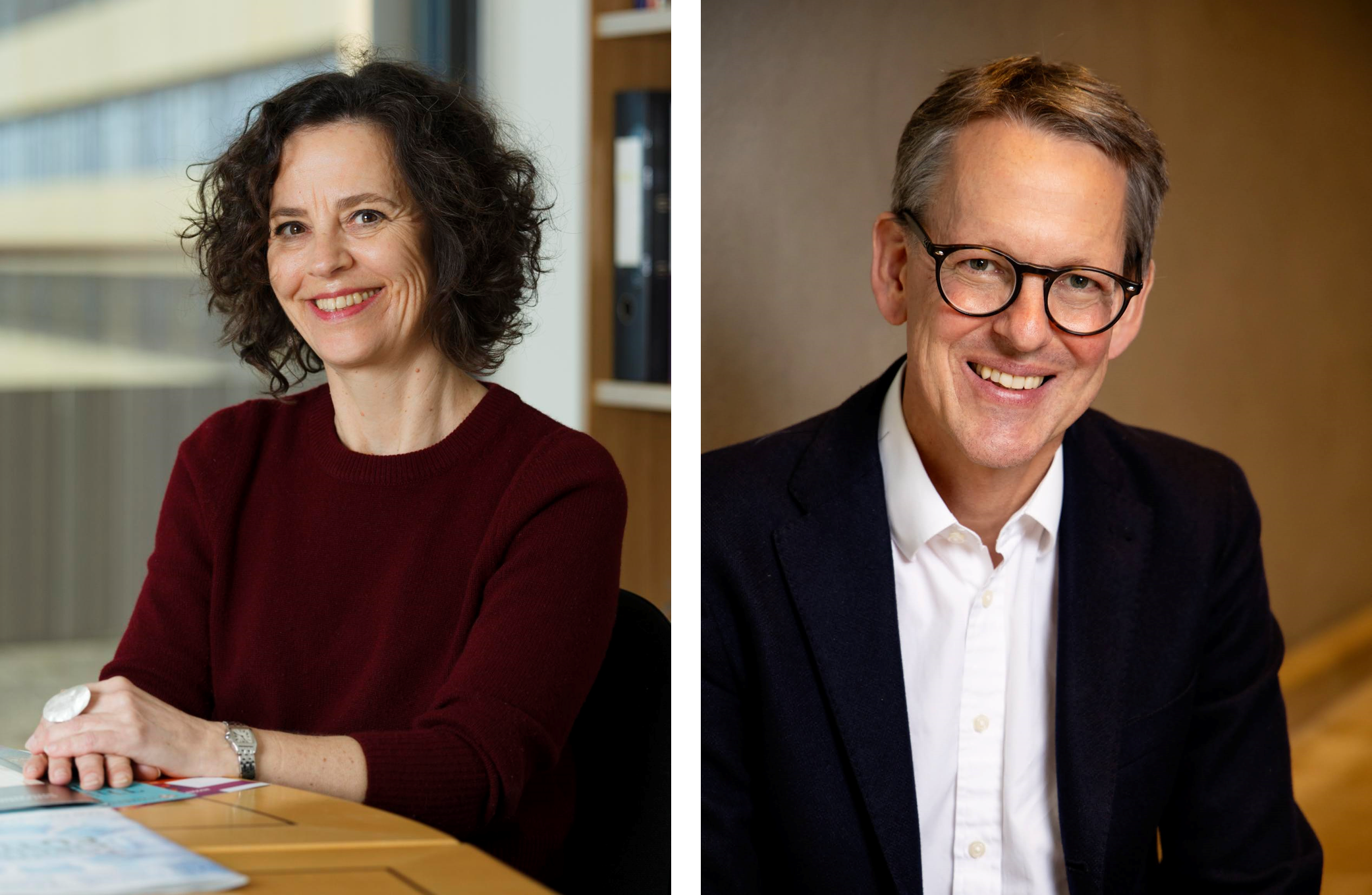
RTG Colloquium: Gabriele Kaminski Schierle & Clemens Kaminski
June 11 @ 14:00 – 16:00
Biological imaging at the nanoscale
Clemens F. Kaminski, University of Cambridge
The advent of optical super‑resolution imaging together with the ability to label specific cellular components with fluorescent markers has ushered in a revolution in our mechanistic understanding of biological processes. In this presentation, I will provide an overview of current methods used to obtain nanoscale insights into the molecular machinery that supports life at the subcellular level. I will present approaches for tracking protein interactions, using single‑molecule localisation microscopy as well as indirect techniques such as fluorescence lifetime imaging microscopy. I will then discuss methods based on structured illumination microscopy, which enable dynamic interrogation of cellular machinery including lysosomes and the endoplasmic reticulum. Finally, I will offer an outlook on emerging trends and how machine learning is transforming our field.
Coffee break & discussion
Beyond Alzheimer’s: conserved lysosomal dyshomeostasis as a driver of synaptic dysfunction across neurodegenerative proteopathies
Gabriele S. Kaminski Schierle, University of Cambridge
While scientists know that in Alzheimer’s disease, lysosomes (the cell’s “trash cans”) clump together and lose their acidity, they didn’t know if this happens in all neurodegenerative diseases.
This study found that this “trash can” breakdown actually happens across many diseases, including ALS, Parkinson’s, and Frontotemporal Dementia. Instead of being spread out normally to clean the whole cell, the lysosomes clump tightly around the cell’s centre.
By tracking cell electricity and layout, the researchers discovered that this clumping severely damages brain signalling. Because the lysosomes are stuck in the centre, they can’t reach the distant outer branches of the brain cells to clear out old, broken proteins. This causes waste to build up and shorts out communication between neurons.
Ultimately, this suggests that fixing where lysosomes sit and restoring their acidity could act as a single, powerful treatment for multiple brain diseases.
Venue: RUN Auditorium
